


If we ask dermatologists about the most common skin conditions, we’re almost certain to hear the answer: acne. Affectingabout 9.4 percent of the world’s population, acne is the most common skin condition among children, teenagers, and adults. Classifications range from mild or moderate to severe, and treatment, of course, depends heavily on the type of acne you have.
WE WILL EXAMINE THE DIFFERENT FORMS OF ACNE, THE CAUSES OF THIS SKIN CONDITION, AND THE VARIOUS TREATMENT OPTIONS AVAILABLE TO MANAGE IT.
Comedogenic Acne– Comedones consist of blackheads and whiteheads, also known as open or closed comedones. Blackheads form when the hair follicle and sebaceous gland, located within the pore, become blocked by sebum. Since blackheads are open, the pigment melanin (responsible for skin color) mixes with oxygen in the air, causing their dark hue—not due to dirt, contrary to popular belief. Whiteheads result from skin cells and sebum blocking the skin’s pores. They are closed comedones, which means this buildup does not react with oxygen; this is why they are light in color.
Comedonal acne is considered a mild form of acne.

Pustular Acne– Pustules, quite simply, are pimples filled with pus. They have a yellow or white center and represent an inflammatory form of acne. The presence of pustules indicates a moderate form of acne, as they usually occur in a more noticeable number.

Papular Acne– Likepustular acne, it is considered a moderate form of acne. Papules are also the result of inflammation. Unlike pustules, however, papules are simply bumps without pus. They are firm bumps that can sometimes spread across the affected area of the body in noticeable numbers.

Cystic Acne– Cysts are a severe form of acne. These lesions result from clusters of papules forming when pores become clogged with excess sebum, dead skin cells, and bacteria, leading to inflammation. This inflammation penetrates deep into the skin and produces cysts filled with pus. The presence of pus makes the cysts feel soft to the touch. However, they are usually very painful and are known to cause scarring, even when treated.

Nodular Acne–Nodules form when dead skin cells, sebum, and bacteria penetrate even deeper into the skin, causing inflammation. Nodules may feel tight or painful to the touch and are particularly recognizable by their firm texture, due to the absence of pus in the lesion. Like cysts, nodules are a severe form of acne and can lead to noticeable scarring during the healing process.
HOW CAN WE TREAT THE DIFFERENT FORMS OF ACNE?
The first step in treating acne is to identify the type and form of acne, since inflammatory and non-inflammatory forms of acne require specific treatment methods to bring them under control. Whether we’re dealing with just a few pustules or cysts and nodules scattered far and wide across the face, shoulders, or back, acne in any form can be difficult to manage. That’s why taking the right steps to treat acne is essential.
Today, medical professionals and researchers know that many different factors can trigger acne and that breakouts can continue to occur throughout our lives. This has led to new research aimed at finding better solutions for persistent acne, including the use of probiotics! The most important thing to know is that, according to the American Academy of Dermatology, probiotics have a very promising effect on chronic forms of acne.
Probiotics have a number of important effects that are essential for skin health: they soothe inflammation, restore the skin’s barrier function, provide protection against harmful environmental particles, and inhibit bacterial growth. Although anyone can benefit from probiotics, they are particularly helpful for patients with inflammatory skin conditions such as acne, as well as those with dry or sensitive skin due to a compromised skin barrier. How often can we use them? It is safe to use both oral and topical probiotics daily, in the morning and at night. Ingredients such as ceramides also help strengthen the skin’s protective barrier. However, if you are currently undergoing a course of antibiotic treatment, you should allow time between the two doses.
HOW EFFECTIVE ARE PROBIOTICS FOR THE TREATMENT AND PREVENTION OF ACNE?
Currently, the term “bacteriotherapy” is re-emerging in the scientific community, encompassing various bacterial products and application methods, including isolated or diverse bacterial species. It can be widely used to describe various uses of bacteria or bacterial components for therapeutic benefits. Most global discussions conclude that probiotics hold great potential for the treatment of acne. The effectiveness of both topical and oral probiotics has been tested, and both have been proven effective. Conclusions on which of the two is the better option vary depending on the set objectives of the study.
WHICH PROBIOTICS HAVE BEEN PROVEN EFFECTIVE AGAINST ACNE?
There are many different types of probiotics. Although researchers have not studied the properties of every single probiotic strain, certain strains have been identified that may have a beneficial effect on skin health by reducing acne. Lactobacillus acidophilus, or L. acidophilus, is one of the best-known probiotic strains. This strain has been tested and found to help reduce acne. Another beneficial probiotic strain for treating acne is called Lactobacillus bifidobacterium, or L. bifidobacterium.
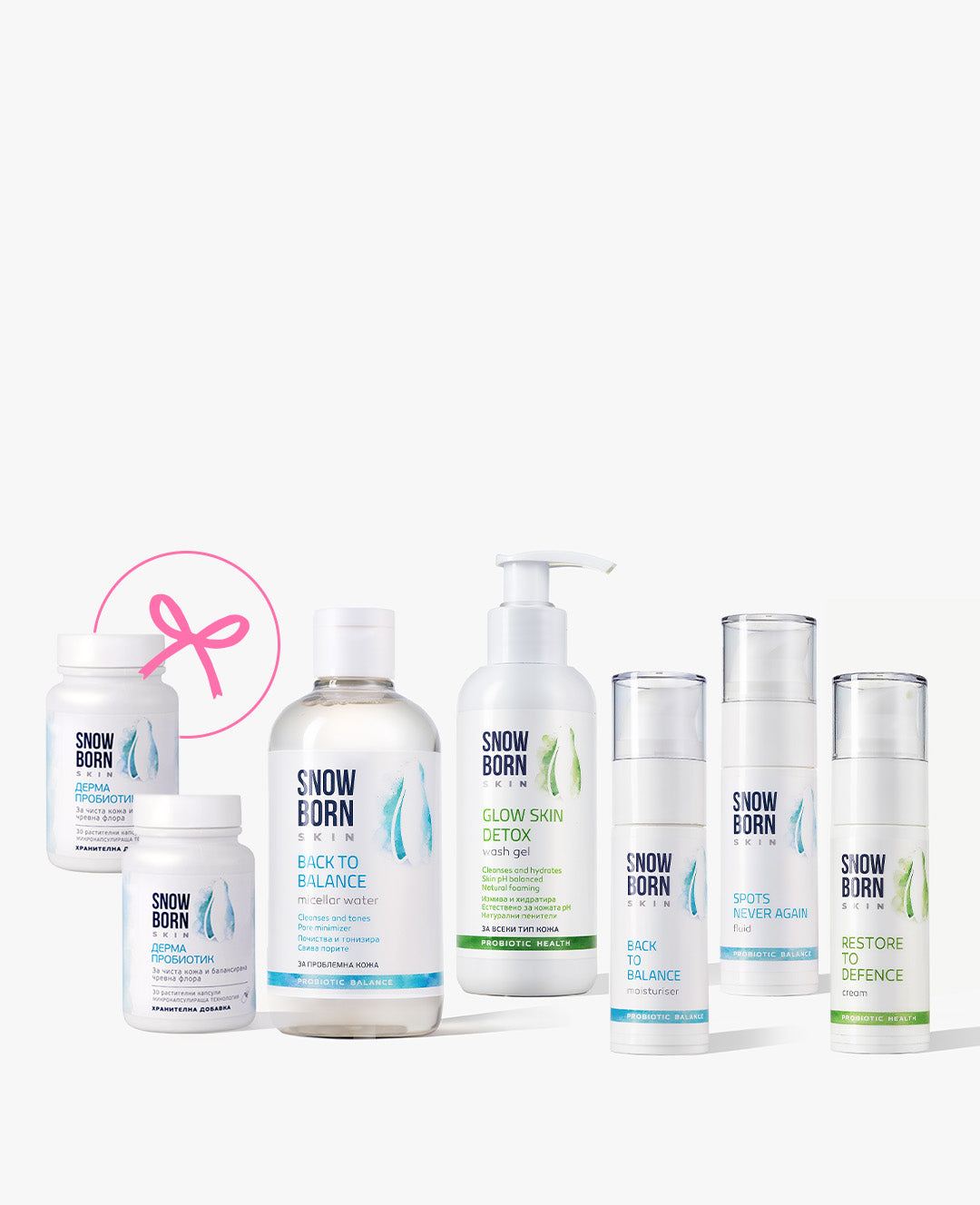
The Snowborn Skin product line contains precisely those ingredients that have been scientifically validated and proven to deliver visible results. That is exactly why dermatologists in Bulgaria recommend using these products as one of the first steps in treating acne!
Probiotic products open up new treatment possibilities that appear even more promising than conventional therapeutic approaches!
For consultations, call 0898 988890 or email consult@snowbornski.com

Dr. Temelkova, M.D.
Practicing physician at the Clinic of
Dermatology and Venereology
MI Ministry of Interior Hospital – Sofia


